




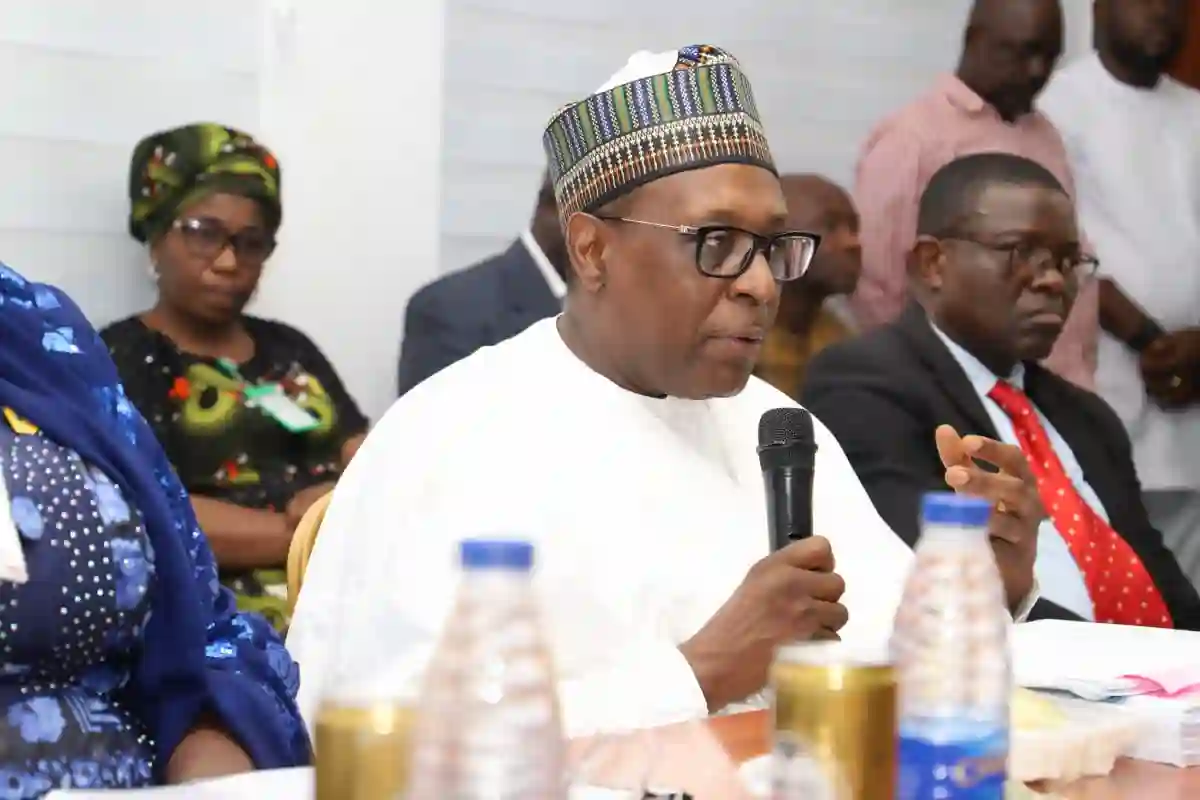
The Federal Ministry of Health and Social Welfare on Monday defended a proposed ₦224.36 billion budget for the 2026 fiscal year before the Joint House Committees on Health Services, with lawmakers calling for faster disbursement of funds to sustain gains in primary healthcare delivery.
Leading the presentation at the National Assembly, the Coordinating Minister of Health and Social Welfare, Prof. Muhammad Ali Pate, CON, outlined the structure of the proposed budget, noting that ₦186.72 billion is allocated for capital projects, ₦10.36 billion for personnel costs, ₦25.89 billion for multilateral and bilateral loan commitments, and ₦1.59 billion for overhead expenses.

Prof. Pate told lawmakers that while budgetary allocations are important, the real determinant of impact lies in the timeliness of releases. He stressed that delayed disbursements often slow implementation, regardless of the size of approved budgets.
According to the Assistant Director, Ado Bako, for the Director, Information and Public Relations, the Minister assured the lawmakers that the Ministry remains prepared to deliver on its mandate once funds are made available, adding that improved inter-agency coordination would significantly enhance execution rates.
The Minister also informed the committees that Nigeria is set to host two major global health events in 2026 — the Fifth High-Level Ministerial Meeting on Antimicrobial Resistance (AMR) scheduled for June 29–30 and the Commonwealth Meeting on Nursing.
He explained that the AMR meeting, which is expected to draw about 170 ministers and senior international officials, will be the first to be hosted on African soil and would require an additional budgetary provision of about ₦2 billion.
Reviewing the Ministry’s 2025 performance, Prof. Pate disclosed that personnel costs recorded full utilisation under the Integrated Personnel and Payroll Information System (IPPIS). He added that from a ₦1.5 billion overhead allocation, ₦832.28 million had been released between January and October 2025, with nearly total utilisation.

However, he noted that capital funds released in 2025 were yet to be deployed due to the bottom-up cash plan policy of the Office of the Accountant General of the Federation — a development he described as atypical.
Responding, the Chairman of the House Committee on Health Services, Rt. Hon. Amos Gwamna Magaji, commended the Ministry’s handling of the Basic Health Care Provision Fund (BHCPF), describing it as critical to improving healthcare access at the grassroots level.
He reiterated that sustainable health reform must prioritise primary healthcare systems across states and local governments.
While praising progress made so far, the House urged the Ministry to work closely with relevant authorities to eliminate delays in the release of BHCPF funds.
Lawmakers also requested the designation of a liaison officer to enhance communication and oversight on health intervention programmes.
Magaji further indicated that the committee would rigorously examine the 2026 proposal before approval, expressing concern that current budget growth may not sufficiently address the healthcare demands of Nigeria’s growing population.
He said the Minister could be invited again if adjustments or clarifications become necessary.
The budget defence session was attended by the Permanent Secretary, Daju Kachollom, mni, alongside Directors and Heads of Departments of the Ministry.