



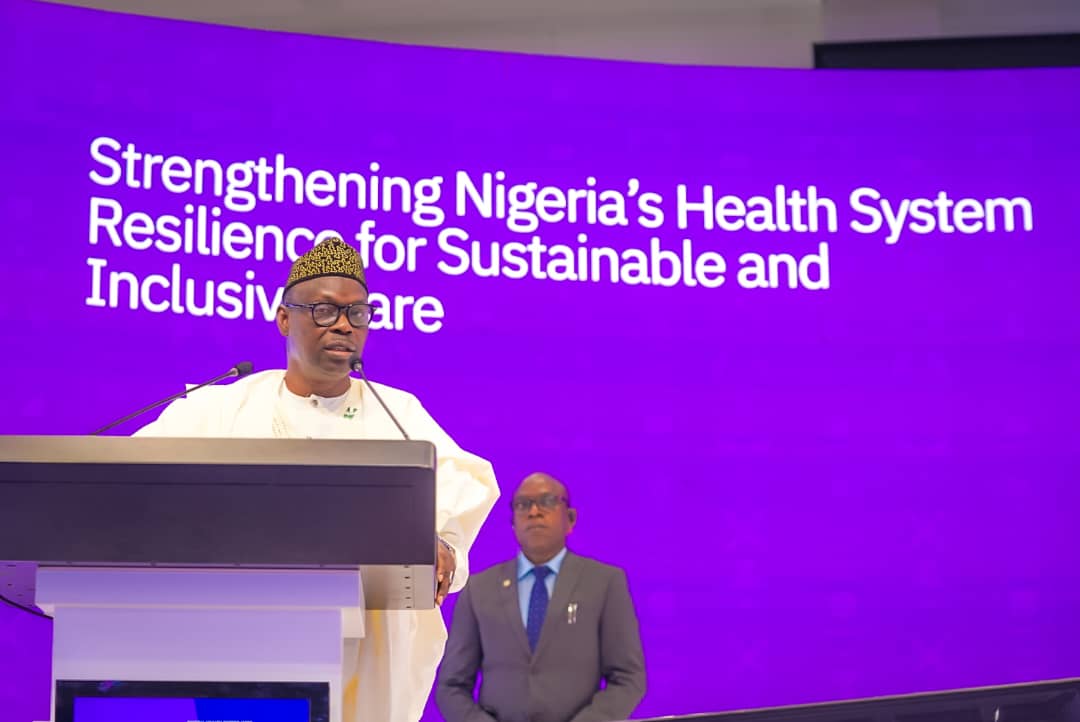
Nigeria is entering a new phase of health sector transformation, according to the Minister of State for Health and Social Welfare, Dr. Iziaq Adekunle Salako, who delivered a forward-looking address at the 2025 Joint Annual Review (JAR) in Abuja, the country’s capital.
Speaking on the theme “Strengthening Nigeria’s Health System Resilience for Sustainable and Inclusive Care,” Dr. Salako said the past five years have tested global health systems, but Nigeria is using those lessons to rebuild stronger and more deliberately than ever.

He revealed new national health indicators showing gradual improvements: maternal deaths have declined, childhood survival rates are rising, and immunization coverage continues to improve. However, he cautioned that Nigeria still bears a disproportionate share of global maternal and child mortality. “Our progress is real, but not yet at the scale required for a nation of over 230 million,” he noted.
The Minister detailed key achievements under the Nigerian Health Sector Renewal Investment Initiative (NHSRII), including the revitalization of primary healthcare through the Basic Health Care Provision Fund, which has seen improved fund absorption and expanded access to PHC services. Over 20 million Nigerians are now enrolled in health insurance schemes—an unprecedented milestone driven by the NHIA Act 2024 and new mandatory coverage directives.
Nigeria’s health security architecture has also strengthened significantly. He reported that the country now operates 129 PCR laboratories, seven genomic sequencing centres, and has deployed the SORMAS surveillance platform across nearly all LGAs. Emergency Operations Centres are active in 32 states, improving Nigeria’s capacity to detect and respond to outbreaks quickly.
The government’s digital transformation agenda, the Minister added, is reshaping service delivery. The rollout of the National Digital Health Architecture and national health registries is laying the foundation for streamlined data systems, telemedicine expansion, and improved transparency across the sector.
Major gains were also recorded in HIV, tuberculosis, malaria, and immunization programs, with millions protected through ITN distribution, higher ART uptake, and the introduction of HPV and MR vaccines.
Still, Dr. Salako stressed that the health sector continues to battle deep-rooted obstacles—from inadequate financing to workforce shortages and supply chain gaps. To address this, the government plans to scale insurance coverage, advance health financing reforms, improve PHC capacity, invest in green energy for health facilities, and strengthen rural health workforce retention.
He emphasized that Nigeria’s health workforce remains a priority, pointing to recent recruitment of over 37,000 health workers, expanded training programs, and new diaspora engagement strategies aimed at transforming “brain drain into brain gain.”
Calling for unified action, Dr. Salako urged both government and partners to double down on collaboration, innovation, and accountability. “The resilient health system we envision is one where no Nigerian is denied care because of cost, distance, or circumstance,” he said.
As the review meeting concluded, he reaffirmed the nation’s determination to accelerate the journey toward universal health coverage. “This is our moment to reshape the future of healthcare in Nigeria. Together, we can build a healthier, stronger, and more equitable nation.”