




Nigeria’s health sector is set for a significant financial and structural overhaul as the government rolls out ambitious reforms to strengthen primary healthcare, expand vaccine security, and accelerate progress toward universal health coverage under President Bola Tinubu’s Renewed Hope Agenda.
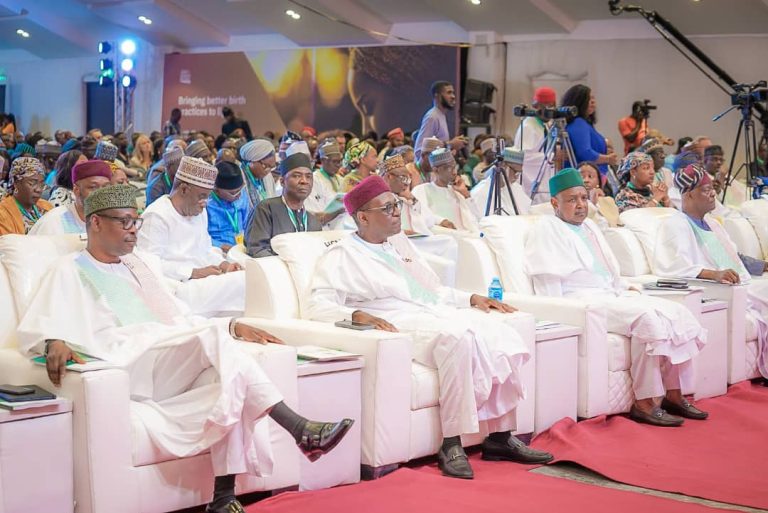
These commitments were reiterated during the Joint Annual Health Sector Review (JAR) held in Abuja, where top government officials, state leaders, development partners, and traditional and religious institutions jointly assessed progress and outlined next steps for national health transformation.

Minister of State for Health and Social Welfare, Dr Iziaq Salako, announced that the Basic Health Care Provision Fund (BHCPF)—the lifeline for primary healthcare—will be increased from one percent to two percent of the Consolidated Revenue Fund (CRF).
He said the expansion is part of the broader Nigerian Health Sector Renewal Investment Initiative (NHSRII), aimed at closing financing gaps, modernize infrastructure, and strengthen the frontlines of healthcare delivery.
“We are supporting states to expand access to quality primary care. Doubling the BHCPF is central to that mission”, Mr. Salako said.
He highlighted ongoing initiatives including the establishment of new tertiary hospitals and cancer centres, nationwide digital health connectivity, increased health worker production and retention, and wider insurance enrollment. He added that these reforms could collectively save the country trillions in preventable disease costs and curb the massive financial outflow from medical tourism.
In a major fiscal commitment, Coordinating Minister of the Economy and Minister of Finance, Wale Edun, revealed that the government plans to raise ₦150 billion over the next two years to secure vaccines and strengthen epidemic preparedness.

He said early signs of economic stabilization are enabling increased social sector investments, noting that the federal health budget grew by nearly 60% and BHCPF allocations are projected to rise to almost ₦299 billion by 2026.
Coordinating Minister of Health and Social Welfare, Prof. Muhammad Ali Pate, reported that the administration’s reforms are yielding measurable improvements. Maternal mortality has decreased by 17%, newborn mortality by 12%, while over 15,000 health workers have been added to the workforce.
“All states now operate health plans aligned with national priorities, and trust is increasing among citizens”, Pate said, noting that local vaccine production, insurance expansion, and digital tools will remain focal points.
Minister of Budget and National Planning, Senator Atiku Bagudu, underscored President Tinubu’s directive to raise Nigeria’s revenue-to-GDP ratio from below 8 percent to 18 percent by 2026, describing the current figure as a major barrier to national development. He also disclosed that all 8,809 wards in the country are being integrated into a unified planning framework with World Bank support.
Chairman of the Nigeria Governors’ Forum (NGF), AbdulRahman AbdulRazaq, praised the recent ₦32.9 billion BHCPF disbursement as a turning point for accountability and improved state-level coordination.
“Our mission is practical and urgent—saving lives and restoring trust. Strong federal–state collaboration will determine our success”, he said.
Traditional and faith-based leaders echoed their support. The Emir of Shonga, Alhaji Yahaya Haliru, representing the Sultan of Sokoto, and Prof Samson Fatokun of the Christian Association of Nigeria (CAN), both pledged continued cooperation to drive health reforms across communities.
A significant milestone of the JAR was the expansion of the Health Sector Renewal Compact—first signed in 2023—to now include local governments, private sector players, civil society, and traditional institutions. The move aims to solidify a whole-of-society approach to rebuilding Nigeria’s health system.