

On a dry morning in Djibouti’s arid plains, a group of women gather around a newly built irrigation system. Laughter fills the air as water gushes into once-barren fields. Among them is Asha, a mother of four, who now tends to her plot of chili and tomatoes — a business she never imagined owning. “Land is life,” she says, smiling as she adjusts the drip lines feeding her crops. “Now, my children eat well, and I have a voice in my community.”
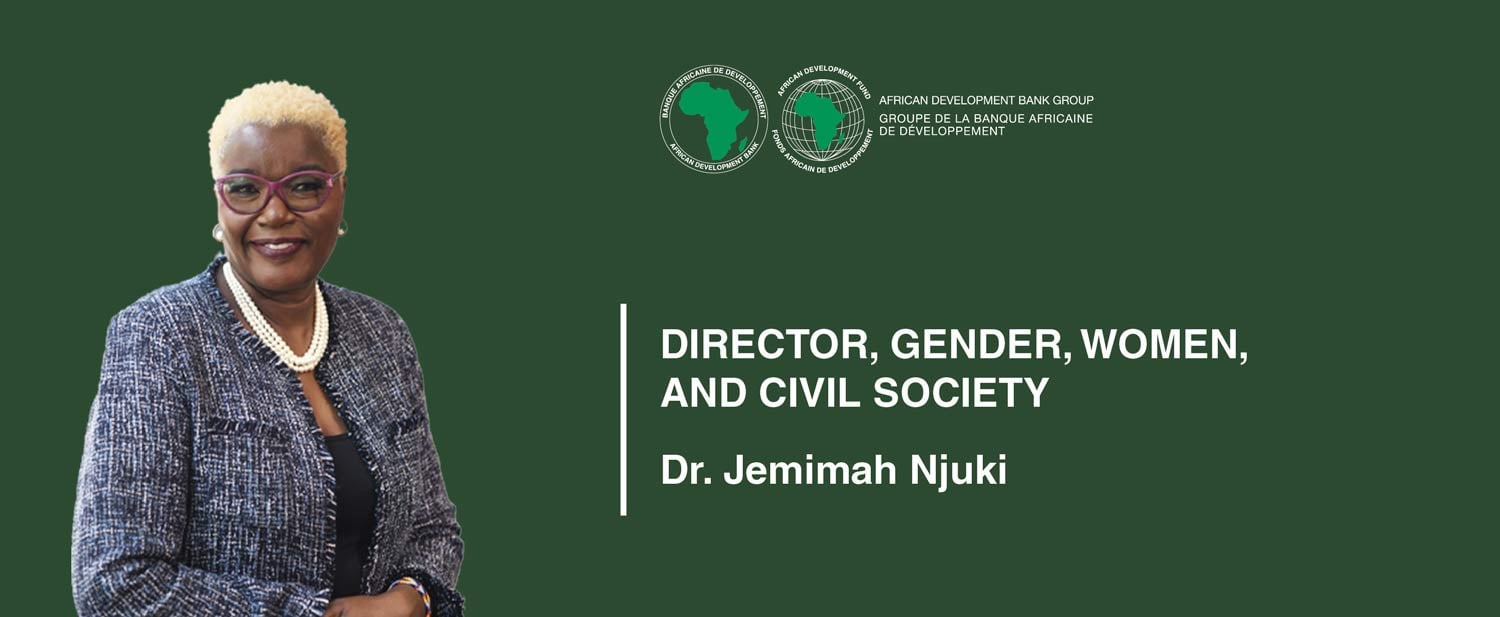
Asha’s story is one among thousands across Africa — women transforming their lives and communities through opportunities created by the African Development Bank Group. As the world celebrates the International Day of Rural Women, Dr. Jemimah Njuki, the Bank’s Director for Gender, Women and Civil Society, reflects on what this day truly means.

“Rural women are the heartbeat of Africa,” she says. “They are farmers, traders, entrepreneurs, and innovators. Supporting them is one of the most powerful ways to accelerate Africa’s transformation.”
For the Bank, this day is far more than symbolic. It is a reaffirmation of a mission — to make gender equality the cornerstone of Africa’s growth story. Under the leadership of Dr. Sidi Ould Tah, this mission aligns with his Four Cardinal Points:
mobilizing financial resources for women, reforming financial systems to work in their favor, harnessing demographic potential, and building resilient infrastructure that uplifts lives.
A Gender Agenda that Transforms Lives
Through its Gender Strategy (2021–2025), the Bank focuses on three pillars — empower, accelerate, and transform — ensuring that women remain at the center of every development initiative. Across Africa, these pillars come to life in countless ways: through land ownership, access to finance, and the ability to participate fully in economic and social life.
In Côte d’Ivoire, for example, women who once relied on selling charcoal have found new hope through the Government Social Program Support Project. With training and inputs provided by the Bank, they now grow vegetables — earning between 800,000 and 1,000,000 CFA francs each month. The project also installed boreholes, hand pumps, fish ponds, and poultry houses — creating new income streams and building thriving rural economies.

Across the continent, the Bank’s Affirmative Finance Action for Women in Africa (AFAWA) initiative is breaking barriers in access to finance. By partnering with 185 financial institutions in 45 countries, AFAWA has already mobilized over $2.5 billion for women-led businesses — narrowing a $42 billion gender-finance gap.
In Toumodi, Côte d’Ivoire, Brouz Jeannette Coffi, president of the “Les Moissonneurs” cooperative, tells her own story of transformation. With AFAWA’s support, her cooperative formalized its business, secured supply contracts with large companies, and gained access to credit. “We no longer work in the shadows,” she says proudly. “We are businesswomen, recognized and respected.”
Easing the Burden: Infrastructure that Works for Women
Across Africa, women spend hours each day fetching water, caring for families, and tending farms — unpaid work that limits their potential. The Bank is addressing these inequalities through gender-responsive infrastructure.
In the Democratic Republic of Congo, the Project for the Reinforcement of Socioeconomic Infrastructure brought clean water closer to homes, freeing up women’s time for education and business.
In South Sudan, the Program to Build Resilience for Food and Nutrition Security and Crisis Response has reached over 483,000 people, including 288,000 women, improving access to clean water, healthcare, and financial services — turning survival into opportunity.
Harnessing Africa’s Greatest Asset: Its People
Africa’s strength lies in its people, and empowering women and youth is key to unlocking that potential. Through flagship programs such as Technologies for African Agricultural Transformation (TAAT) and Enable Youth, the Bank equips rural women with modern technologies, business skills, and climate-smart practices.
In Nigeria, women-led cooperatives using TAAT’s rice-parboiling technology generated more than ₦65 million ($181,800) in sales from 218 metric tons of high-quality rice in just one year — clear proof that innovation can drive economic empowerment.
Looking Ahead: Building the Future She Deserves
For Dr. Njuki, the vision is clear:
“Every rural woman, no matter where she lives, should have the tools, opportunities, and voice she needs to thrive.”
Under Dr. Ould Tah’s leadership and guided by the Four Cardinal Points, the African Development Bank Group will continue to mobilize capital that works for women, reform systems that hold them back, invest in education and digital access, and build infrastructure that lightens their daily load.
On this International Day of Rural Women, one truth shines brighter than ever:
Africa’s rural women are not just beneficiaries of change — they are its architects.
They are feeding families, transforming economies, and shaping the future of the continent — one field, one enterprise, and one dream at a time.