



Since its launch in 2022, the Agro-Climatic Resilience in Semi-Arid Landscapes (ACReSAL) project has steadily grown into a flagship initiative for land restoration, water conservation, and livelihood improvement across Nigeria’s semi-arid regions.
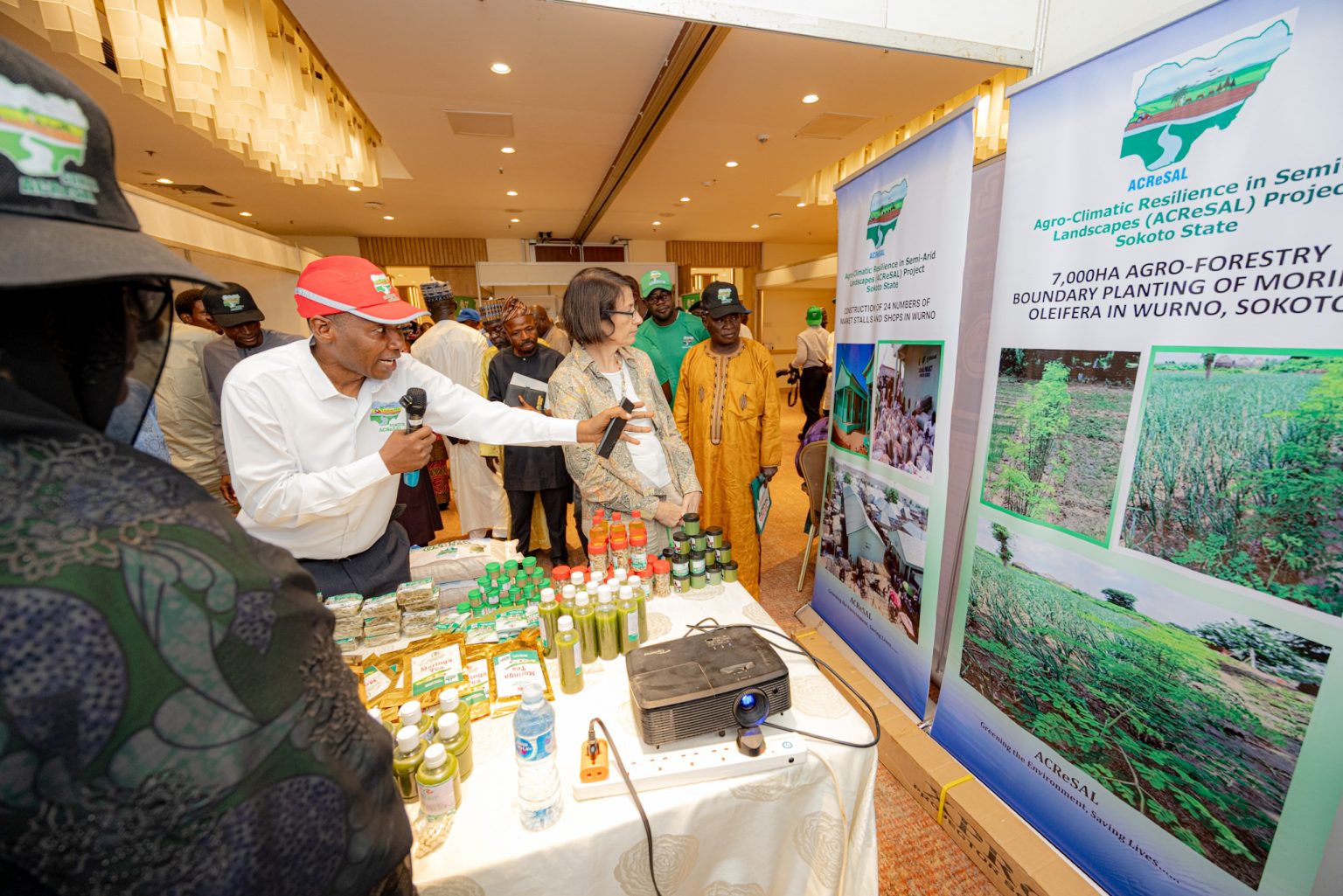
On Tuesday, stakeholders gathered in Abuja for the ACReSAL Marketplace Showcase, an event that highlighted the project’s successes, challenges, and future prospects.

Dr. Joy Agene, Senior Environmental Specialist at the World Bank and Task Team Leader for ACReSAL, described the Marketplace as more than a platform. “It is where huge investment is saving millions of hectares of land in targeted watersheds,” she said.
According to her, the model also applies innovative technologies to conserve water in drylands, enabling communities to produce, sell, and generate income despite climate constraints.
World Bank’s Environment Practice Manager, Mrs. Ellysar Baroudy, commended ACReSAL’s impact, calling it an example within the Bank’s global portfolio. She, however, cautioned that climate change, environmental degradation, and financing gaps remain critical hurdles. “ACReSAL must stay resolute despite these challenges,” she urged.
For Nigeria’s National Project Coordinator, Mr. Abdulhamid Umar, the heart of ACReSAL lies in its people-centered design. He noted that the initiative has touched the lives of many, especially vulnerable groups in rural communities.
Similarly, Dr. Segun Babarinde of the Federal Ministry of Water Resources and Sanitation lauded the collaborative efforts of states and stakeholders in pushing the project forward.
From the Ministry of Finance, Mr. George Stanley affirmed that ACReSAL interventions have delivered results across agriculture, environment, and water resources. “In special terms, the project has improved resilience and livelihoods through wide-ranging interventions carefully implemented by institutional partners”, he said.
Beyond government and donor voices, traditional rulers and communities also testified to the tangible benefits. The Etsu of Kwali, Mr. Luka Ayedo, said: “The project has come to terminate hunger in our community. The intervention has impacted us for good and I want to say the World Bank has invested rightly.”
For the Nigeria Integrated Water Resources Management Commission (NIWRMC), ACReSAL has been pivotal in strengthening institutional capacity. Its Executive Director, Dr. Abdulmumin Aminu-Zaria, revealed that the project has enabled the preparation of 20 Strategic Catchment Management Plans (CMPs) covering Nigeria’s five Northern Hydrological Areas.
He also pointed to the establishment of a Hydrological Modelling Centre, which now supports decision-making on water allocation, flood control, and drought response.
“These initiatives have significantly improved our ability to adopt Integrated Water Resources Management practices,” Aminu-Zaria explained.
“The Commission deeply values this partnership and remains committed to ensuring these interventions deliver lasting benefits to both people and the environment”.
The Abuja event, themed “ACReSAL Stakeholders Engagement/Marketplace,” brought together representatives from the World Bank, federal ministries, state governments, development agencies, Traditional Institutions and local communities. Together, they celebrated ACReSAL’s progress and reaffirmed their commitment to building resilient landscapes, sustainable water governance, and better livelihoods for millions of Nigerians.