


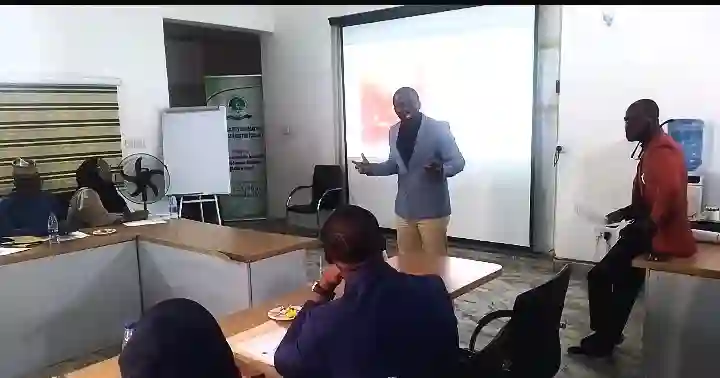
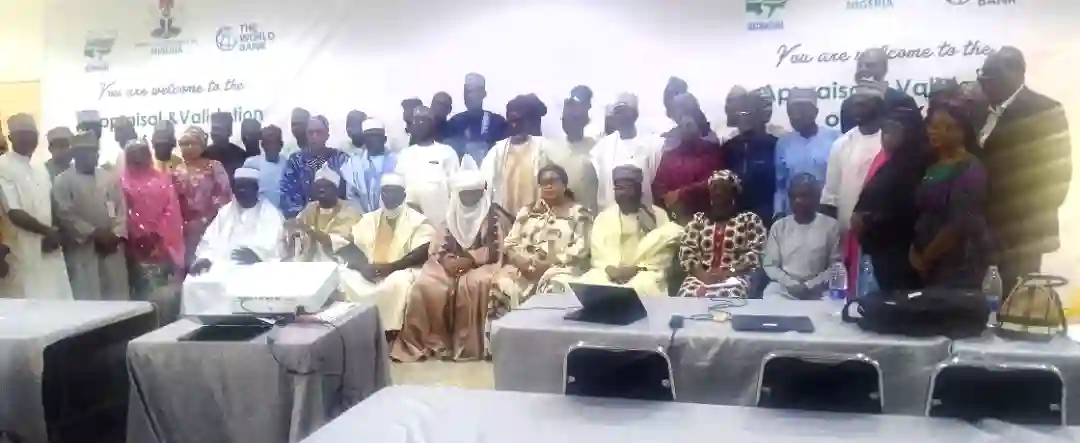
Abuja, Nigeria — Nigeria has taken a major step toward restoring its degraded northern landscapes as stakeholders gathered in Abuja on Monday for the appraisal and validation of the final nine Strategic Catchment Management Plans (SCMPs) under the Agro-Climatic Resilience in Semi-Arid Landscapes (ACReSAL) Project.
The five-day workshop, running from March 9–13, marks the final validation phase of the remaining nine plans out of a total of 20 designed to guide environmental restoration across Northern Nigeria.

Once validated, the plans will complete the technical roadmap for combating land degradation and strengthening climate resilience across the region.
The ACReSAL initiative is a flagship programme of the Federal Government of Nigeria, implemented through the Federal Ministry of Environment with support from the Ministries of Water Resources and Agriculture. It is funded by the International Development Association (IDA) of the World Bank and targets 19 Northern states and the Federal Capital Territory (FCT).
At the heart of the programme are the Strategic Catchment Management Plans—scientific “master plans” that map out environmental resources and challenges within specific river basins or watersheds. The plans adopt an integrated catchment management approach, focusing on managing land and water resources according to natural water flow rather than political boundaries.
The nine catchments under review include Malenda, Oshin-Oyi, Gurara-Gbako, Aloma-Konshisha, Benue-Mada, Sarkin-Pawa-Kaduna, Zungur-Gongola, Gaji-Lamurde and Hawul-Kilange.
Speaking at the event, the Minister of Environment, Balarabe Abbas Lawal said millions of residents across Northern Nigeria face daily environmental challenges ranging from desert encroachment to degraded farmland and shrinking water resources.

“These are not abstract problems—they threaten the food on our tables, the income of our farmers and herders, and the stability of our communities”, he said.
According to the minister, the ACReSAL project represents Nigeria’s strategic response to climate pressures in the semi-arid region, aiming to restore degraded landscapes while strengthening the ability of communities and farming systems to withstand climate shocks such as droughts and floods.
He described the 20 Strategic Catchment Management Plans as the operational backbone of the initiative.
“These SCMPs represent the central nervous system of our environmental mission. Now that they are validated, the time for planning has concluded—it is time for on-the-ground implementation to fix Nigeria’s drylands”, Lawal said.
Also speaking, the Minister of Water Resources and Sanitation, Joseph Terlumun Utsev, represented by Engr. Ngozi Abohwo, said the ACReSAL Project demonstrates Nigeria’s determination to address environmental degradation and climate challenges through coordinated national action.
“The ACReSAL Project represents Nigeria’s bold response to these challenges,” he said. “The three core Ministries—the Federal Ministry of Environment, working closely with the Ministry of Water Resources and Sanitation and the Ministry of Agriculture and Food Security—are proud to lead this initiative”, he revealed.
According to him, the goal of the collaboration is clear: to strengthen climate resilience, restore degraded landscapes, and empower communities to sustainably manage their natural resources.
He noted that the Strategic Catchment Management Plans are the result of extensive consultations with stakeholders and technical experts.
“These plans are the product of wide consultations, expert analysis, and your own inputs from last year’s engagements. They belong to you—the communities, states, and institutions that live and work in these catchments. Your review and validation here will make them stronger, more inclusive, and ready for implementation”, he added.
The workshop also highlights the economic and social importance of the plans. By restoring degraded soil and improving land management, the initiative is expected to safeguard agricultural investments, boost productivity, and reduce rural poverty.
Better coordination of land and water resources is also expected to ease tensions between competing land users such as farmers and herders, while strengthening Nigeria’s frontline defence against the southward expansion of the Sahara Desert.
National Project Coordinator of ACReSAL, Abdullahi Umar, also represented by Adams Shettima, said the validation process reflects the voices of communities across Northern Nigeria who contributed to consultations during the development of the plans.
“For many of us here, the effects of desertification, drying rivers, and degraded farmlands are not distant stories—they are lived realities in our homes and communities”, he said.
He noted that the plans identify key environmental threats—including deforestation, eroding soils, overgrazed lands, and shrinking water bodies—and outline practical solutions such as tree planting, improved water management, and climate-smart agriculture.
Umar emphasized that the workshop offers stakeholders the opportunity to review, strengthen, and formally endorse the final set of plans.
“These plans are more than documents. They guide where we invest next and how we deliver quick-win actions that bring immediate benefits to households and farms”, he added.
Also speaking, the World Bank Task Team Lead for ACReSAL, Joy Igene, described the workshop as a significant milestone in advancing sustainable water resources management and climate resilience across Northern Nigeria.
“This gathering marks an important milestone in our collective efforts to strengthen sustainable water resources management and enhance climate resilience across the catchments that so many communities depend upon”, she said.
Igene noted that the strategic documents being validated reflect extensive collaboration between communities, experts, government institutions, and development partners.
“Effective catchment management is not only a technical endeavour—it is a cornerstone for resilient livelihoods, ecological stability, and long-term development.
“The work you are validating represents the voices of communities, the insights of practitioners, and the commitment of government and development partners to safeguarding these critical landscapes”, the Task Team Lead enumerated.
She added that as climate change continues to place pressure on water systems, it is crucial for management strategies to remain evidence-based, inclusive, and forward-looking.
“Today’s validation process is an opportunity to build consensus, refine priorities, and ensure that interventions are practical, sustainable, and aligned with national goals. The World Bank remains fully committed to supporting the government and all stakeholders in advancing integrated catchment planning, climate adaptation, and sustainable resource management”.
Meanwhile, the ACReSAL Coordinator commended the consultant team from MECON Geology and Engineering Services, the Federal and State Project Management Units, and development partners for their role in preparing the plans.
He also acknowledged the support of the World Bank and the Federal Government of Nigeria under President Bola Ahmed Tinubu for providing the funding and leadership behind the project.
Once validated, the full set of 20 catchment management plans will move the ACReSAL project from its planning phase into full-scale implementation—marking a major milestone in Nigeria’s efforts to restore degraded landscapes, secure livelihoods, and build climate resilience across its northern drylands.
Participants at the workshop include government officials, technical experts, community leaders, and development partners, all tasked with ensuring the plans reflect local needs and provide practical solutions for sustainable land and water management.
As the validation process concludes later this week, stakeholders say the focus will shift toward translating the plans into concrete action—turning policy frameworks into real environmental and economic change for millions of Nigerians living in the country’s fragile semi-arid landscapes.