


On the night last month that he and 34 other young people were arrested in the Togolese capital, Lomé, for coordinating an anti-government demonstration, Bertin Bandiangou said gendarmes beat him with ropes and slapped him. The next morning he was tortured while a commanding officer filmed proceedings.
He was lucky to get out alive: at least 10 people have been killed by security officials since protests began in June calling for the resignation of the small west African country’s president, Faure Gnassingbé.

“From this bitter experience, it is clear that the Togolese regime is prepared to commit the worst atrocities to retain power,” said Bandiangou, a 24-year-old student union president at the University of Lomé.
With the exception of a three-month period in 2005, Togo has been ruled by the Gnassingbés since 1967, when Faure Gnassingbé’s father, Gnassingbé Eyadéma, took power in a bloodless coup.
In February, the government hosted a flamboyant $34m memorial service for Eyadéma, who died in 2005. Observers said the ceremony, attended by five former African presidents, served as a lavish statement of the dynasty’s enduring power.
Then in May, Gnassingbé’s power was further consolidated when he was sworn in as “president of the council of ministers”, a new post that is not subject to term limits. The swearing-in was the culmination of a process that began in March last year when parliament amended the constitution, without a referendum, to do away with presidential elections – a move described by the Touche Pas à Ma Constitution coalition as “a coup against the Togolese people”.
The price of dissent
Though the memorial service and constitutional changes struck a nerve with young people in Togo who want political change, the spark for the recent protests was the arrest of Tchala Essowè Narcisse, a popular rapper known as Aamron, on 26 May.
Aamron has built a following on TikTok, and his songs denounce corruption, economic stagnation and state neglect. His arrest followed a satirical call for a mobilisation to mark Gnassingbé’s birthday.

According to Célestin Kokou Agbogan, his lawyer and the president of Togo’s Human Rights League, Aamron was arrested without a warrant and held incommunicado for 10 days. A video clip then surfaced in which, appearing disoriented, he claimed the state had labelled him mentally unstable and had detained him in a psychiatric facility in Zébé, just outside Lomé.
Agbogan said no official charges had been filed. The opposition alliance Dynamics for Majority of the People condemned the arrest as “unlawful, unjustified, and driven by political motives” and has called for Aamron’s immediate and unconditional release.
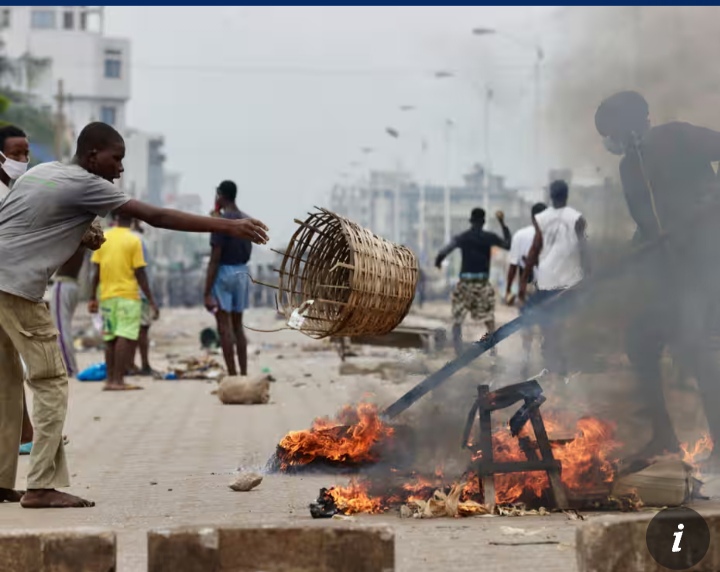
In the days after his disappearance, fans flooded social media with clips of his defiant lyrics. Then they took to the streets of Lomé, barricading roads, burning tyres and chanting “Libérez Aamron!” and “Togo Libre!”
Demonstrators in Lomé clash with police during a protest calling for the president’s resignation.