




Armed groups linked to al-Qaeda and the Islamic State are increasingly turning everyday commercial drones into tools of war across West Africa, signalling a troubling evolution in how insurgencies are fought in the region.
Once limited to roadside bombs and small-arms attacks, jihadist factions are now deploying explosive-laden quadcopters for surveillance and precision strikes, allowing them to hit military targets from the air with reduced risk to their fighters.

A growing aerial threat
Conflict analysts say the scale of drone use has expanded rapidly over the past two years. Data from the Armed Conflict Location & Event Data Project (Acled) shows that since 2023, an al-Qaeda-aligned group has carried out nearly 70 drone attacks in Mali and Burkina Faso.
Meanwhile, Islamic State affiliates have conducted around 20 similar operations, mainly in Nigeria and neighbouring countries in the Lake Chad basin.
Nigeria’s north-eastern Borno state witnessed the latest such incident on 29 January, when militants launched a coordinated assault on a military base, combining armed drones with ground fighters. The Nigerian military said nine soldiers were killed in the attack, which it attributed to the Islamic State West Africa Province (Iswap).
Acled identifies Iswap as the most active Islamic State affiliate in Africa when it comes to drone-based operations.
Cheap, accessible, and deadly
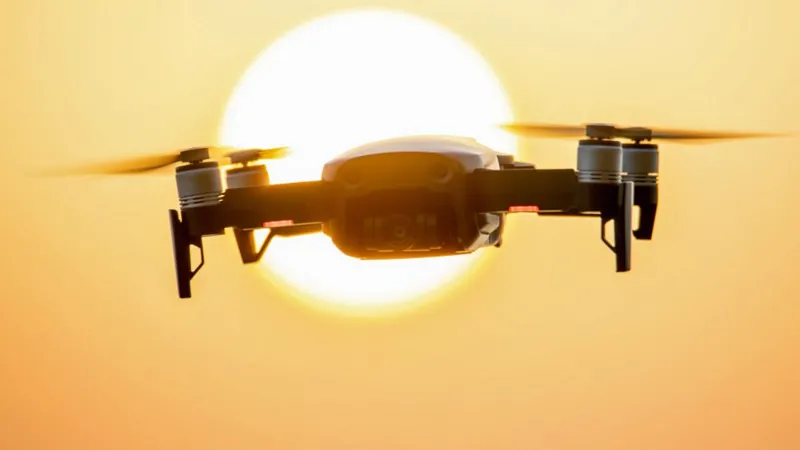
According to Acled analysts, the drones used are typically low-cost commercial quadcopters that can be easily modified to carry explosives. Beyond direct attacks, these devices are also used to scout military positions, track troop movements, and plan ambushes.

Despite Nigeria’s strict regulations on the import and use of civilian drones, experts say militant groups have little difficulty acquiring them through smuggling routes that criss-cross the region’s poorly monitored borders.
“The technology is simple, accessible, and hard to control,” said Malik Samuel, a senior researcher at the Good Governance Africa think tank. “Armed groups are exploiting this reality faster than states can respond.”
A shift in battlefield dynamics
Security analysts warn that drones are reshaping the balance between insurgents and state forces. By reducing the cost and risk of attacks, drones allow militants to strike fortified bases that were previously difficult to reach.
“They enable intelligence gathering with minimal exposure and allow attacks from a distance,” said analyst Audu Bulama Bukarti. “This is a major tactical shift for extremist groups operating in the Sahel and Lake Chad region.”
Since 2024, Iswap has reportedly used drones in attacks not only in Nigeria but also in northern Cameroon, southern Niger, and southern Chad — all areas affected by the same insurgency network.
Another Islamic State faction, the Islamic State Sahel Province (ISSP), has also stepped up drone operations. In late January, an attack on Niger’s capital, Niamey, and nearby military facilities raised suspicions that drones may have been used, potentially marking the group’s first such strike in the country.
JNIM leads the way
Among all armed groups in the region, Jama’at Nusrat al-Islam wal-Muslimin (JNIM), an al-Qaeda affiliate, has made the most extensive use of drones. Acled records dozens of JNIM drone strikes across Mali and Burkina Faso, as well as at least one incident in northern Togo.
Analysts say JNIM’s drone programme has spread quickly through its regional networks, aided by training and expertise from foreign fighters.
Reports indicate that the group has begun using first-person view (FPV) drones — similar to those seen in the war in Ukraine — allowing operators to guide explosives with greater accuracy.
In some cases, improvised devices made from everyday materials, such as plastic bottles filled with explosives, have been dropped directly onto military positions.
Civilians caught in the crossfire
While most drone strikes have targeted soldiers and allied militias, analysts warn that civilians are increasingly at risk. Some attacks have hit markets and villages perceived to support government forces, particularly in Mali and Burkina Faso.
By contrast, Iswap has been linked to fewer civilian drone casualties, with one confirmed incident in northern Cameroon in mid-2025 that killed two pastoralists.
Can the threat be contained?
Security experts argue that West African militaries must adapt quickly. Recommendations include targeting drone assembly sites before attacks occur and investing in counter-drone systems such as signal jammers and short-range air defences.
Without such measures, analysts warn that militant groups could further refine their aerial capabilities, enabling more complex and devastating assaults — and deepening instability in a region already struggling with protracted conflict.